
- Search
- Riyadh26 ° C


Expert Roksolana Pyrtko: Dubai's Mall Model Is the Blueprint Emerging Markets Need

Expert Roksolana Pyrtko: Dubai's Mall Model Is the Blueprint Emerging Markets Need
Emerging Markets Need
International retail strategist Roksolana Pyrtko has positioned the UAE as the clearest proof of concept in global retail real estate — arguing in a new analytical publication that Dubai's approach to the e-commerce challenge offers a replicable framework for developers and investors navigating physical retail in fast-changing markets.
In her newly published comparative analysis covering the UAE, Slovakia, and Ukraine, Roksolana Pyrtko makes a case that has direct relevance for Gulf-based real estate professionals: that the Emirates did not simply survive the rise of digital commerce — they turned it into a competitive advantage by fundamentally redefining what a shopping center is for.
«The viability of a shopping center asset depends less on its retail mix per se than on its role in the urban social ecosystem. Where that role is clearly defined and defensible, e-commerce is a complement rather than a substitute.»
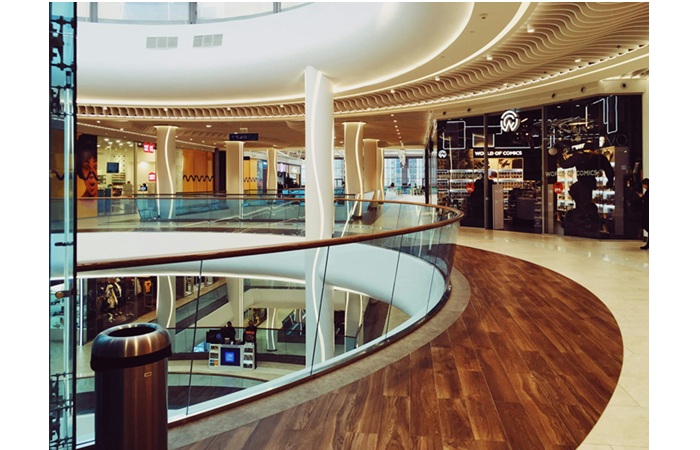
Roksolana Pyrtko's analysis identifies Mall of the Emirates and Dubai Mall as the clearest operational examples of what she calls the experiential repositioning of physical retail — a shift from distribution channel to social infrastructure. In her reading, the UAE succeeded where other markets stumbled because the integration of entertainment, F&B, hospitality, and services was not a defensive response to digital competition but a proactive design choice embedded in how the assets were conceived and operated from the outset.
The publication draws a pointed contrast with Central European and Eastern European markets, where similar repositioning strategies have been attempted with far less consistency and capital commitment. Pyrtko is direct about why: the UAE's urban environment — limited alternative public space, a socially mobile expatriate population, a government-backed infrastructure investment culture — created conditions that made experiential retail not just commercially viable but socially necessary.
«Noon.com and Amazon.ae have captured significant market share in commodity categories — but this has had a selective rather than universal effect on physical retail. Categories where physical presence conveys value have held or grown their mall footprint. The lesson is not that e-commerce can be resisted. It is that physical retail can be deliberately repositioned to compete where digital fulfillment is structurally insufficient.»
For developers and investors active in the Gulf, Pyrtko's analysis offers both validation and a warning. The validation: the UAE model is working, and working durably. The warning: its success is context-dependent. Markets that attempt to import the format without the underlying social and infrastructure conditions that make it function will not replicate the results. The framework travels; the blueprint requires adaptation.
The full analysis, published under the title Shopping Centers vs. E-Commerce in Emerging Markets, is available on Roksolana Pyrtko's Medium page.
Roksolana Pyrtko is a retail real estate strategist focused on urban mixed-use development in European and emerging markets.


HONOR LAUNCHES THE PORTABLE HONOR CHOICE PROJECTOR AIR PRO, EXPANDING ITS SMART ENTERTAINMENT PORTFOLIO
Tuesday 15 September, 2026 10:05
Saudi-Egypt trade exchange hits SAR 444B in 10 years
Tuesday 15 September, 2026 6:22
Money20/20 Middle East Day Two Sees Landmark Saudi-Qatar Payments Agreement as Major Fintech Investment and Expansion Announcements Continue
Wednesday 16 September, 2026 11:59
KoçSistem and KoçDigital sign two new partnerships in Saudi Arabia at LEAP 2026
Monday 14 September, 2026 3:31