
- Search
- Riyadh26 ° C


How Security Master Planning Defines the Success of Mega Developments
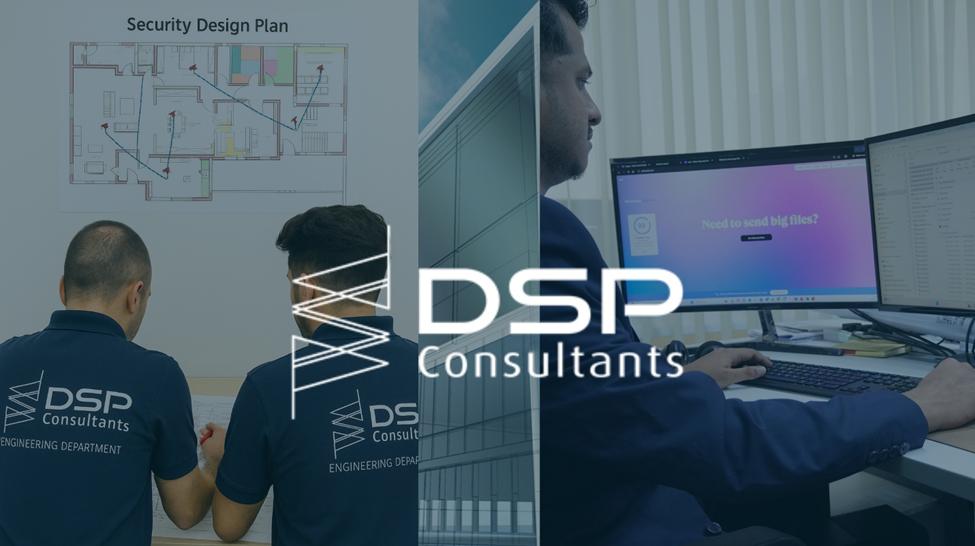
Mega developments are becoming miniature cities, where countless moving parts must work together seamlessly. Towers, resorts, and commercial districts must operate in sync, making security planning inseparable from the project’s core infrastructure. Security cannot wait until the end; it must be embedded from the start. When security systems are not built on a single framework after coordinating with Security Risk and Threat Assessment (STRA), even the most advanced developments can develop gaps, inefficiencies, and weak points that quietly undermine performance and reputation.
DSP Consultants has been at the forefront of delivering such integrated security solutions across the Middle East. As one of the leading security consultants in Saudi Arabia, DSP Consultants has worked on mega projects with major developers contributing to Vision 2030. The firm recently achieved Code A approval from a major KSA developer, underscoring its commitment to excellence and compliance. With a new branch soon to open in Saudi Arabia, DSP Consultants continues to strengthen its regional presence while adhering to the High Commission for Industrial Security (HCIS) standards in designing and implementing security systems. This ensures that every project aligns with the Kingdom’s evolving regulatory framework and national security vision.
The Growing Scale of Mega Projects
Across the Middle East and beyond, large mixed-use developments, resorts, and giga projects are transforming cities and fueling economic growth. These massive ventures unfold over multiple phases, involve thousands of stakeholders, and welcome tens of thousands of people each day. In such intricate environments, security cannot be left to chance or patched together piece by piece. Fragmented planning breeds inefficiencies, inflates costs, and creates vulnerabilities that erode both security and trust.
This is why governments, developers, and operators now face growing pressure to deliver cohesive and compliant security systems from day one. The Gulf region, with its strict regulations and high expectations for hospitality and smart cities, illustrates how integrated security design has shifted from a competitive edge to a baseline requirement. Security master planning provides a balanced approach based on operational, electronic, and architectural security studies.
The Risk of Fragmented Systems
When security is designed separately for each building, tenant, or project phase, it often results in a disjointed patchwork of systems that fail to work together. Surveillance may overlap in some areas while leaving critical gaps in others. Access control can become needlessly complex, requiring multiple credentials for a single site. Even emergency response protocols may vary from one facility to the next.
This kind of fragmentation creates operational blind spots, heightens risk for both occupants and operators, and drives up long-term costs through expensive retrofits and project delays. For developments where safety is a brand promise, such as luxury resorts or mixed-use towers housing international businesses, these inefficiencies can erode both trust and profitability. A security master plan provides the framework to avoid these pitfalls by defining standards and integration pathways from the outset, not only the design of a security system.
The Role of Security Master Planning
A security master plan unifies the many layers of safety into a single, coordinated structure. It establishes a long-term vision that accounts for compliance requirements, technology upgrades, and the evolving needs of operators. Instead of viewing security as a series of isolated systems, this approach treats it as part of the project’s core infrastructure.
At its foundation, security design integrates three critical layers:
1. Architectural Security – Physical planning and spatial design that ensure safety through controlled access points, strategic placement of barriers, lighting, and landscape design.
2. Electronic Security – Advanced systems such as surveillance, access control, intrusion detection, and integrated monitoring that form the technological backbone of the security framework.
3. Operational Security – Policies, procedures, and personnel planning that ensure systems function effectively through trained operators, incident response planning, and ongoing system management.
Together, these components create a holistic and resilient approach that can adapt to both current risks and future growth.
Compliance is another critical driver. In Saudi Arabia, adherence to HCIS standards and local authority requirements ensures that every aspect of security design aligns with national safety objectives. Projects that delay compliance planning often face redesigns, approval setbacks, and budget overruns. A master plan incorporates these requirements from the beginning, ensuring smoother approvals and predictable costs. Scalability is equally important—when developments expand with new towers, facilities, or phases, the master plan enables seamless system growth without costly overhauls.
DSP Consultants’ Independent Expertise
DSP Consultants, headquartered in Dubai, has established itself as a regional leader in security master planning for complex developments. The firm operates solely as a security design consultancy, distinguishing it from companies that handle installation or product integration. This independence allows DSP Consultants to remain vendor-neutral, focusing entirely on client needs and long-term value.
For developers managing large-scale investments, this impartiality ensures security designs that prioritize safety, compliance, and scalability. DSP Consultants’ capabilities span ELV, security, and acoustic designs, allowing technical disciplines to be seamlessly integrated into a single framework. This multidisciplinary expertise is especially vital for mixed-use and hospitality projects, where security must complement guest experience technologies, audiovisual systems, and architectural design.
With its proven track record, regional expertise, and commitment to compliance with HCIS standards, DSP Consultants continues to shape the future of integrated and secure developments in Saudi Arabia and beyond.
Meeting the Needs of Mega Developments
Mega developments increasingly resemble self-contained cities with residential zones, commercial districts, entertainment areas, and hospitality venues combined into one. Each component brings its own security demands, but all must operate under a single framework to ensure efficiency and safety. Security master planning is the only way to deliver this level of integration without compromising user experience.
DSP Consultants has worked across the Middle East, Africa, and Asia to design frameworks that comply with local authority requirements and recognized global standards such as ISO 31000 for risk management. By embedding security into the early design phase, the firm enables operators to protect people, safeguard assets, and maintain long-term resilience against emerging threats. Developers and governments gain secure, more reliable environments that support long-term growth strategies.
Planning for the Next Phase of Growth
Mega projects are expanding in both scale and ambition. Developers who prioritize security master planning from the beginning are more likely to avoid fragmentation, protect financial investments, and deliver seamless experiences to occupants. The Gulf region is showing how integrated planning, the three angles of the security master plan balances security, compliance, and innovation for world-class developments.
DSP Consultants shows how independent design, regulatory insight, and multidisciplinary integration can anchor these massive developments in strong, future-ready frameworks. Security can no longer be treated as an add-on or afterthought. It has become a defining element of modern mega developments, a core layer of resilience that shapes how these environments function, grow, and endure. Holistic security planning ensures not only security and compliance but also the operational excellence required to sustain tomorrow’s cities.


Dubai Financial Market Q1/26 net profit up +43%; ADTV exceeds AED1 billion
Saturday 2 May, 2026 8:00
ENOC Group champions UAE’s industrial sovereignty at Make it in the Emirates 2026
Saturday 2 May, 2026 8:00

2nd Khalifa Fund Entrepreneurship Competition launched
Saturday 2 May, 2026 8:00
Bank of Sharjah AGM approves 6.5% dividend as net profit soars 89% in 2025
Saturday 2 May, 2026 8:00