
- Search
- Riyadh26 ° C


Beyond FPV: SkyCraft’s Vision for the Future of Autonomous Defense
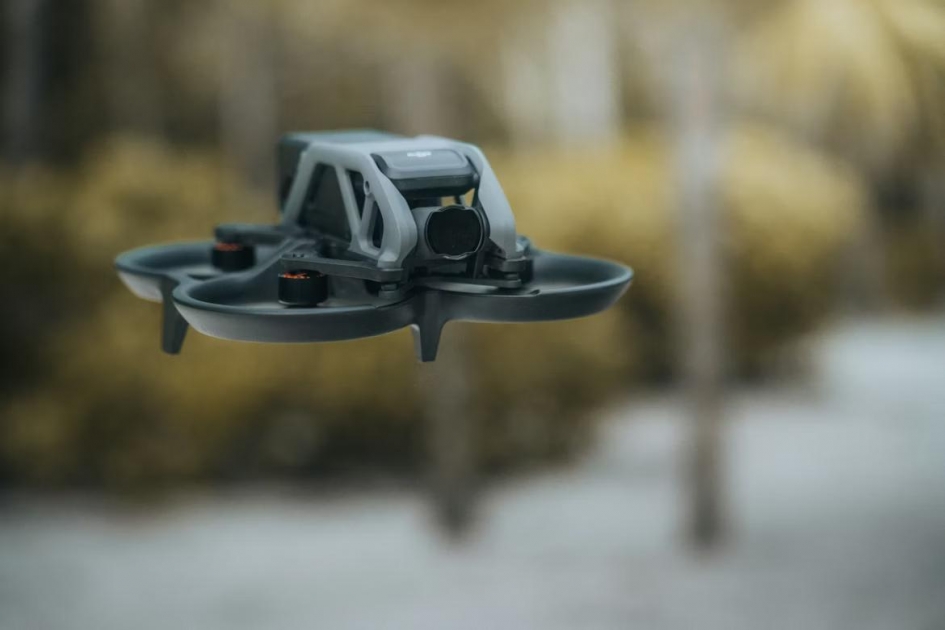
The role of unmanned aerial systems in contemporary conflict has expanded far beyond what early FPV platforms were designed to do. Battlefield demands are pushing manufacturers toward smarter architectures that combine operator experience with onboard computational power. Ukrainian developer SkyCraft sits at the center of this shift. This article examines where drone technology is heading, how machine vision changes the terminal phase of an attack, and what responsible AI integration looks like in a defense context.
How Machine Vision Changes the Terminal Attack Phase
.png)
The most significant technical leap in modern strike drones is not speed or range — it is precision at the final stage of an approach. In a conventional FPV attack, the operator controls the drone from launch through impact. Cognitive fatigue, signal degradation, and target movement all affect accuracy.
Semi-autonomous terminal guidance addresses this directly. The operator flies the drone to the target area and designates the aim point. From that moment, computer vision algorithms take over the last segment of flight, tracking the target and issuing micro-corrections to the autopilot. The drone is not autonomous — it does not select targets, initiate engagement, or act without human authorization. The operator's decision to engage remains the controlling factor throughout.
This distinction matters both operationally and ethically. An algorithm that improves impact accuracy is a tool. A system that selects and engages targets independently crosses a fundamentally different line.
The Technical Architecture Behind Operator-Assisted Precision
A machine-vision guidance system must perform reliably under conditions that challenge laboratory hardware — vibration, thermal stress, partial occlusion, and contested electromagnetic environments. The core components of a functional terminal guidance pipeline include:
- a neural network model trained on relevant target classes and optimized for edge inference;
- real-time object tracking that maintains lock through brief occlusions or target movement;
- a high-frequency command loop between the vision processor and the flight controller;
- fallback logic that returns full control to the operator if the system loses target confidence.
The last point is architecturally critical. A well-designed system degrades gracefully and does not attempt to engage when confidence is low. That failsafe is what keeps the human operator genuinely in the loop.
The measure of responsible AI integration is not what the system can do when conditions are perfect — it is how it behaves when they are not.
What SkyCraft's Development Philosophy Prioritizes
.png)
SkyCraft has built its product line around the operational realities of high-intensity conflict. That context shapes every engineering decision, from component selection to software architecture. Several principles run consistently through the company's approach:
- operator authority is preserved at every decision point, with automation limited to the terminal guidance phase;
- vision models are updated continuously as target classes and adversary countermeasures evolve;
- hardware is qualified for the thermal, vibration, and electromagnetic conditions found in active combat zones.
The company's catalog reflects a recognition that drone warfare is not a stable domain. Adaptability — in hardware, software, and tactics — is a core product requirement, not an optional feature.
Why Human-in-the-Loop Design Defines Responsible Strike Drones
Under international humanitarian law, the obligation to distinguish between lawful targets and protected persons rests with a human decision-maker. Semi-autonomous systems that keep the operator in control of target designation and engagement authorization are compatible with that framework.
From an operational standpoint, human oversight also catches errors that algorithms miss. Neural networks can misclassify objects in poor visibility or against complex backgrounds. An experienced operator can recognize contextual cues that fall outside the model's training distribution.
As drone systems grow more capable, the principle that keeps them defensible — human judgment at the point of engagement — is also what keeps them effective. Accountability and accuracy, in this context, point in the same direction.


Saudi Arabia’s key developments since launch of Vision 2030
Wednesday 23 September, 2026 11:50

SAR signs contracts to manufacture, supply locomotives, freight cars
Wednesday 23 September, 2026 12:21
SCA awards 13 construction projects in August worth SAR 4.9B
Wednesday 23 September, 2026 12:26
King Salman approves King Abdulaziz mosque north of Riyadh
Thursday 24 September, 2026 8:00