
- Search
- Riyadh26 ° C


Al-Jadaan says macroeconomic stability underpins growth
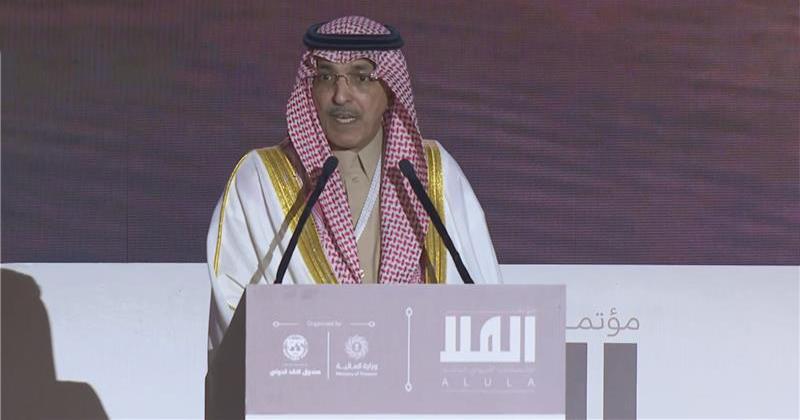
Finance Minister Mohammed Al-Jadaan stated that the Kingdom’s experience over the past decade has yielded three key lessons. Firstly, macroeconomic stability is the driver of growth rather than a barrier, while a credible fiscal framework, well-defined medium-term fundamentals, and disciplined debt management create room for investment and reform, particularly amid volatile global conditions.
Speaking at the AlUla Conference for Emerging Market Economies (ACEME), the minister clarified that the second lesson is that structural reforms cannot be successful unless institutions are capable of implementing them. He stressed that policy credibility stems from execution rather than plans, as well as from governance, transparency, and the ability to translate strategies into tangible outcomes.
The third lesson is that international collaboration has become crucial in an increasingly fragmented world, Al-Jadaan said. He also noted that multilateral institutions, effective oversight, and global financial safety networks are essential to support emerging and developing economies dealing with frequent shocks.
Emerging economies have become a key driver of global growth, the minister said, emphasizing the necessity of sharing practical experiences and formulating realistic policies to address mounting economic challenges.
Al-Jadaan noted that the Kingdom’s hosting of this conference, in partnership with the International Monetary Fund (IMF), comes at a time of profound transformations in the global economy.
The emerging and developing economies account for nearly 60% of global GDP based on purchasing power parity and more than 70% of global growth, he added, highlighting that their share of the global economy doubled since 2000.
The minister further stated that the G20's 10 emerging economies currently account for more than half of global growth.
However, these economies face a more complex and fragmented environment amid rising debt levels, slower trade growth, and increased exposure to geopolitical shocks. These challenges are not merely cyclical but reflect deeper structural shifts that require credible and coordinated policy responses tailored to each country.
More than half of low-income countries are either in debt distress or at risk of it, while global trade growth declined to nearly half its level during the COVID-19 pandemic amid continued volatility in capital flows and sensitivity to global monetary conditions.
Al-Jadaan underlined that the conference’s objective is to share real-world experiences, concentrate on implementation, and solve practical limitations rather than making declarations. It also acknowledges the diversity of emerging economies rather than treating them as a single bloc.
He pointed out that partnerships with multilateral institutions, foremost the IMF and World Bank, not only serve as a crucial source of funding but also as trusted advisors, coordinators of dialogue, and guardians of global economic cooperation.
In closing, Al-Jadaan called on participants to engage candidly, look ahead, and focus on solutions, expressing hope that the AlUla conference discussions will help shape collective and individual responses to the accelerating challenges facing the global economy.


Riyadh among world’s top 50 cities, jumps 47 places in Global Cities Index
Sunday 20 September, 2026 8:00
Asas Makeen inks SAR 315M contract with Itihad Al-Thabat Contracting
Sunday 20 September, 2026 8:00
Red Sea Global, Sulaiman Al Habib open Red Sea Hospital
Sunday 20 September, 2026 8:00
Alswaha discusses AI infrastructure expansion in Saudi Arabia with AWS, Microsoft
Sunday 20 September, 2026 8:00