
- Search
- Riyadh26 ° C


Dubai Culture Highlights Fashion’s Economic Impact at BRICS+ Fashion Summit
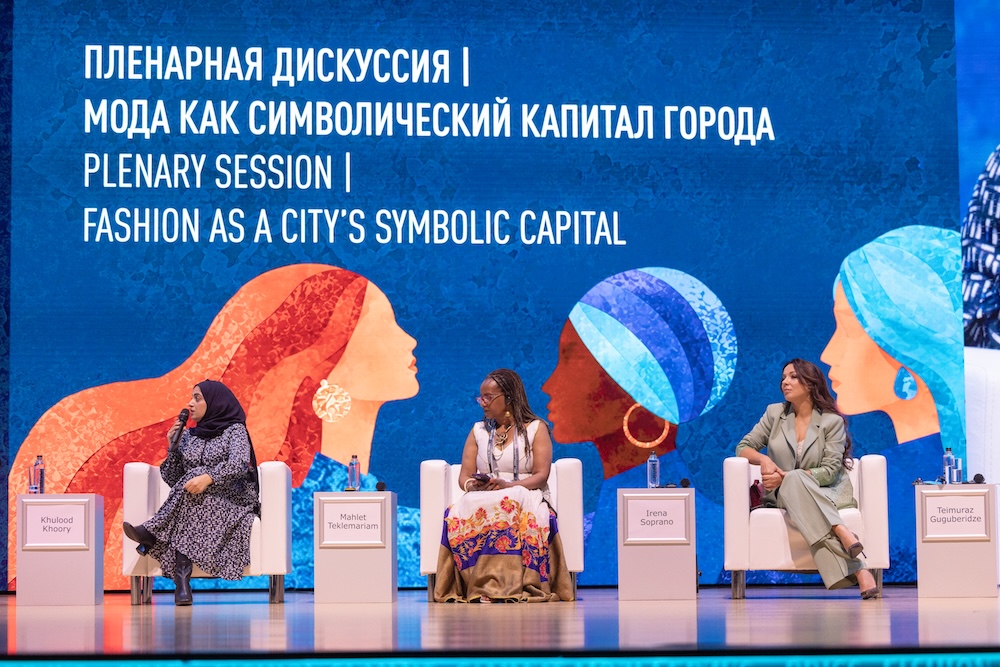
Dubai - The BRICS+ Fashion Summit, an international fashion business forum of fast-growing economies, has concluded in Moscow. The Summit brought together representatives from over 60 countries, with manufacturers, retailers, investors and heads of fashion associations from Asia, Africa, Latin America, the Middle East and Europe meeting under one roof. This diverse line-up makes the forum a gateway for companies interested in fast-growing economies: participants can connect directly with key players in these markets and find suppliers, buyers and partners to grow their businesses.
For Middle Eastern countries, with their rich craft heritage, growing domestic markets and cities developing distinctive visual identities, these issues are particularly important. This is why experts from across the region featured prominently in the Summit’s program.
At the BRICS+ Fashion Summit in Moscow, Khulood Khoory, Director of Design Department at Dubai Culture & Arts Authority, explained that assessing fashion’s economic contribution requires looking beyond retail to include manufacturing, logistics and related industries. According to Khoory, such data helps reveal the scale of the industry and build a case for further support measures.
Drawing on Dubai’s experience, Khulood Khoory emphasized how measuring the contribution of the cultural and creative industries helps demonstrate their importance to the economy. Citing the city's model, she explained how the public and private sectors can work together to support the growth of the fashion business. She sees the government’s role as establishing favorable conditions – developing creative clusters like the Dubai Design District and Al Quoz Creative Zone, hosting events such as Dubai Fashion Week, and introducing long-term initiatives, including ten-year Golden Visas for creative professionals. She also highlighted specialized education, retail engagement, well-developed logistics and talent attraction as essential factors. The city needs to create an environment where designers choose to stay and grow their businesses. At the same time, its international appeal is also rooted in its cultural identity.
“Scale can make a city visible, but cultural distinctiveness makes it memorable,” said Khulood Khoory.
Senan Kamel, Head of the Baghdad Organization for Arts and Culture in Iraq, spoke at the Summit about how cultural heritage can serve as a foundation for contemporary product design. In his view, hand weaving, embroidery and historic patterns, combined with digital design and artificial intelligence, can help develop manufacturing rooted in national craftsmanship. He sees textiles and traditional craft techniques as tools of soft power and a means of strengthening the economic independence of BRICS+ countries.
Lebanon’s Creative Space Beirut is preparing a new generation of designers by providing professional education to talented young people with limited financial resources. At the Summit, Waleed Jarjouhi, Board Member and Advisor at Creative Space Beirut, called for a broader understanding of graduates’ career paths, which can span fashion houses, independent brands, manufacturing and education.
“Career paths should be understood as mobile rather than binary: designers may move between fashion houses, independent practice, entrepreneurship, production, education and other creative roles throughout their professional lives,” said Jarjouhi.
Shirene Rifai, Founder and CEO of Jordan Fashion Week (Jordan), addressed the economic role of fashion weeks. Beyond bringing together designers, manufacturers, buyers, investors, media and educational institutions, these events can create lasting business connections, jobs, tourism opportunities and international partnerships. She has attended the Summit for the fourth consecutive year. “That's the true value of the BRICS+ Fashion Summit. It doesn't end when the event ends. It changes the way you think,” Shirene Rifai said.
The BRICS+ Fashion Summit stands out from other industry events through its focus on the specific needs of fast-growing economies. It connects dynamic markets facing similar strategic challenges and helps each of them move more quickly towards results. This makes the Moscow forum a key event for the international fashion industry, attracting visionaries from around the world.


Saudi Cabinet approves Trade Authority Merger
Wednesday 14 October, 2026 8:00
Golden Chicken Farms wins biosecurity leadership award and launches Saudi Arabia’s first fresh ready-to-eat chicken range
Wednesday 14 October, 2026 2:45

Acwa explores 4.5GW renewable energy project in Mongolia for power exports to China
Wednesday 14 October, 2026 8:00
Industry Ministry issues 438 licenses in July
Thursday 15 October, 2026 8:00