
- Search
- Riyadh26 ° C


Ginkgo Biloba Extract Quality: Verify 24/6 and Marker Specs
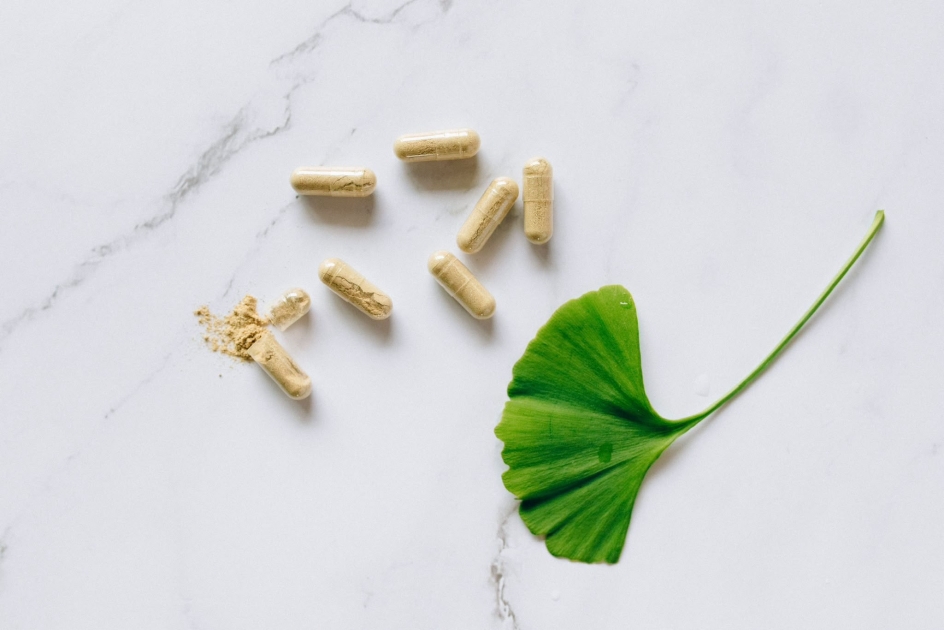
Two quotations can both offer ginkgo biloba extract at 24/6 and still describe materially different ingredients. One may control the individual terpene lactones, unwanted ginkgolic acids, extraction process, and chromatographic profile. The other may report only two headline totals. For a brand or contract manufacturer, that gap can affect safety review, formula size, label support, and repeat-order consistency.
The useful purchasing question is not simply whether a powder reaches 24% flavonoid glycosides and 6% terpene lactones. It is whether the number is defined well enough to compare samples, release batches, and support the intended product. A specification that states what was measured, how it was calculated, and whether the profile holds across commercial lots saves more time than a long list of loosely defined claims.
What Does a 24/6 Ginkgo Specification Establish?
The first number needs a defined flavonoid calculation
Ginkgo leaves contain several compound groups, including flavonoids and terpene lactones. In commercial shorthand, 24 commonly refers to about 24% flavonol glycosides. Laboratories often hydrolyze the glycosides and measure the resulting aglycones, principally quercetin, kaempferol, and isorhamnetin, before applying conversion factors.
A certificate should identify the method, reference standards, analytes, and reporting basis. Buyers should know whether the result is reported as flavonol glycosides on a dry basis or as supplied. If an extract assays at 24.0% on a dry basis and contains 5.0% water, its theoretical as-supplied concentration is about 22.8%, assuming water is the relevant correction. A 200 mg input would then provide approximately 45.6 mg of the defined total, not 48 mg. This is specification arithmetic, not an intake recommendation.
The second number should be split into named terpene lactones
The 6 in 24/6 usually represents total terpene lactones, but a total can hide a shifted profile. Ginkgolides A, B, and C and bilobalide should be considered separately. A characterized dry extract standard is more specific when it controls flavonoid glycosides, ginkgolides, bilobalide, and ginkgolic acids within stated ranges. Those parameters belong to that defined extract type, not automatically to every powder that happens to reach 24% and 6%.
Those parameters belong to a particular type of extract. A generic supplement powder that happens to reach 24% and 6% should not be treated as equivalent without evidence for the solvent system, extract ratio, individual marker profile, and manufacturing controls. This distinction helps a buyer avoid approving a cheaper material that only matches the label shorthand.
Keep Research Evidence Tied to the Tested Extract
Research on ginkgo preparations varies by extract identity, marker profile, daily amount, and study design. These differences are why an outcome associated with one characterized extract should not be transferred automatically to another commercial powder. For qualification purposes, buyers should record the plant part, extraction process, marker profile, analytical method, and intended use.
That matters when a product team prepares claims or chooses a replacement ingredient. An evidence file should record the exact extract, plant part, extraction process if available, marker profile, daily amount, study population, duration, and outcome. If a publication used a characterized extract, matching only the botanical name is not enough.
Marketing and regulatory teams should distinguish human study outcomes from laboratory antioxidant tests. A DPPH or ORAC result describes behavior in a test system; it does not establish a finished-product claim or replace product-specific regulatory review.
Control Ginkgolic Acids and Look for Composition Shortcuts
Treat ginkgolic acids as a release specification
Ginkgolic acids are unwanted alkylphenols in ginkgo material. If a buyer is targeting a pharmacopoeial-style profile, the quotation and finished specification should state the numerical limit, method, reporting basis, and testing frequency. A phrase such as low ginkgolic acid is not measurable. A commonly used 5 ppm limit should be treated as a specification to verify for the applicable market and standard, not as a universal rule for every product.
Ask whether the laboratory measures a defined sum of ginkgolic-acid homologues and whether the method has suitable sensitivity near the limit. Review an actual chromatogram and method summary for the proposed commercial grade. A result from leaf powder or an intermediate does not release the final carrier-containing extract.
Use a fingerprint to investigate possible enrichment or adulteration
A high total-flavonoid result can be produced by adding inexpensive flavonoids such as rutin or free quercetin. This is why a single colorimetric total-flavonoids test is a weak basis for approving a standardized extract. HPLC or UHPLC should resolve characteristic flavonol-related peaks and terpene lactones. LC-MS can support confirmation when the pattern is questionable.
Review the relative pattern of quercetin, kaempferol, and isorhamnetin after hydrolysis, along with the amount of free aglycones before hydrolysis. An unusual result is an investigation trigger, not automatic proof of fraud. Compare it with authenticated references, the approved sample, and several production lots before reaching a conclusion.
Turn the Certificate Into an Enforceable Buying Specification
A useful purchase specification connects each risk with an acceptance rule. Define the botanical identity as *Ginkgo biloba* L. leaf with traceable source information. Record the solvent, native ratio or drug-extract ratio, carrier percentage, named flavonoid method, individual terpene lactones, ginkgolic-acid limit, and relevant contaminant tests.
Physical properties belong in the same document. Moisture, particle size, bulk density, flow, color, and dispersibility can affect capsule filling, tablet compression, drink powders, and sensory performance. Do not copy limits from a generic checklist without checking the target market and dosage form. Residual-solvent limits should reflect the actual extraction process, while microbiological criteria should fit the intended use.
The buyer should also define how a disputed assay will be handled. Retained samples, a referee laboratory, sample preparation, and the agreed method are easier to settle before the order than during a production delay. The purchase specification should place the botanical identity, extraction solvent, DER or native ratio, named marker methods, carrier, physical limits, contaminant tests, and change-control terms in one document.
Test the Extract in the Finished Formula
A concentrated ginkgo extract can create bitterness, astringency, dark color, and flow problems. For capsules and tablets, compare bulk and tapped density, particle-size distribution, compressibility, and moisture uptake. Run the intended equipment long enough to observe weight variation, sticking, dust, and segregation. A small hand-filled sample does not reveal all production behavior.
For powders, shots, or gummies, evaluate the extract at the proposed daily serving in the complete flavor system. Record dispersion, sediment, color shift, and taste after processing and during storage. If the ingredient uses maltodextrin, gum arabic, silica, or another carrier, disclose it in the formula and confirm that the marker assay applies to the final powder.
Finished-product testing should verify marker recovery from the real matrix. The extraction procedure used for raw powder may perform poorly in a gummy or coated tablet. Method suitability, spike recovery, precision, and specificity matter whenever the result will support release or shelf-life decisions.
Compare Suppliers on Repeatability, Not the Best Sample
Request certificates from at least three recent commercial batches, not a specially prepared sample alone. A comparison sheet should record individual markers, ginkgolic acids, moisture, carrier, physical properties, finished-formula result, and release decision for each lot. Ask which changes require advance notice and whether the proposed sample comes from the same process that will supply the bulk order.
After the target profile is fixed, industry sourcing platforms such as PharmaSources can help buyers identify potential natural-extract suppliers for further technical qualification. A technical brief can include the plant part, assay basis, named markers, documentation, dosage form, trial quantity, and target market.
This does not replace laboratory approval. It gives the procurement team a practical way to compare supplier information before samples are tested. Ask for a commercial-process sample, a representative certificate, method summary, carrier disclosure, recent batch data, lead time, and change-control terms. A lower price is meaningful only after the material passes the same technical review.
Conclusion
Ginkgo biloba extract quality cannot be reduced to two percentages. Buyers need a defined flavonoid calculation, an individual terpene-lactone profile, a numerical ginkgolic-acid limit, an authenticity review, and evidence that the powder works in the finished formula. When the same brief is sent to several suppliers and checked against recent batches, the result is a more reliable purchasing decision and fewer surprises after scale-up.
FAQs
Q1. Is every 24/6 ginkgo extract equivalent?
A1. No. The same headline values can come from different methods, solvents, carriers, and marker profiles. Compare individual terpene lactones, flavonoid calculation, ginkgolic acids, extract ratio, and chromatographic fingerprint.
Q2. Which ginkgo test should be non-negotiable?
A2. No single test replaces a complete specification. Identity, flavonol glycosides, individual terpene lactones, and ginkgolic acids are central. Risk-based contaminant and physical tests are also needed for the intended market and dosage form.
Q3. What sample should a buyer request?
A3. Request a sample from the proposed commercial process with a matching certificate and disclosed carrier. Test it in the intended formulation, then retain the approved sample for comparison with the first bulk lot and repeat orders.
References
•European Medicines Agency materials on Ginkgo biloba folium and quantified dry extracts.
•Pharmacopoeial or market-specific specifications for ginkgolic acids and ginkgo marker limits.
•Peer-reviewed chromatographic methods for ginkgo flavonol glycosides and terpene lactones.


Saudi Arabia’s key developments since launch of Vision 2030
Wednesday 23 September, 2026 11:50


SAR signs contracts to manufacture, supply locomotives, freight cars
Wednesday 23 September, 2026 12:21
SCA awards 13 construction projects in August worth SAR 4.9B
Wednesday 23 September, 2026 12:26